All news
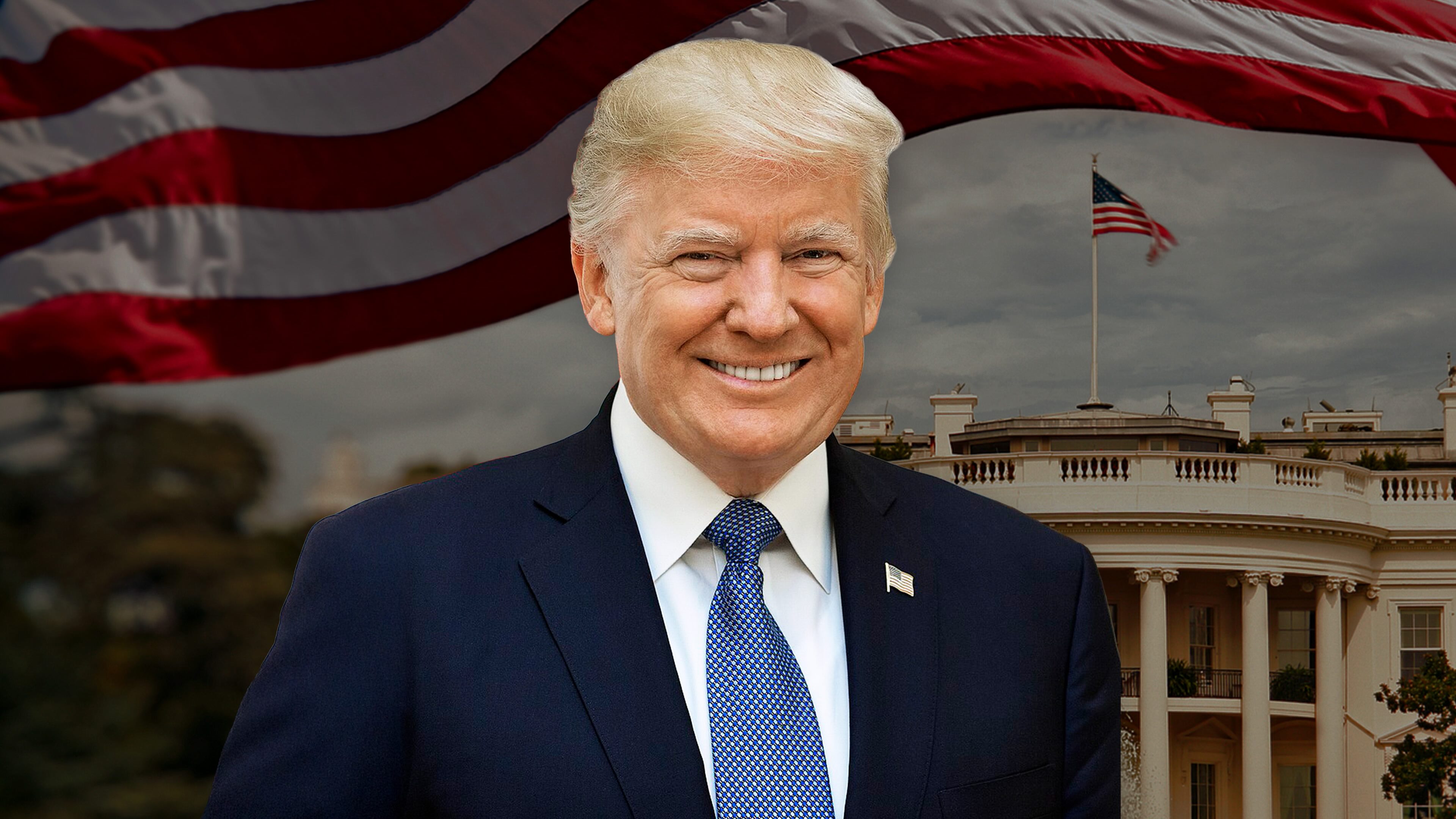
Trump Personally Intervened to Force Live Nation Settlement
Donald Trump bypassed standard legal procedure to mandate a settlement between the Department of Justice and Live Nation, the parent company of Ticketmaster. The directive, issued days before a scheduled antitrust trial, effectively derailed a government effort to challenge the concert giant’s dominance over the ticketing market.

Strategy Raises $2 Billion in Stock Sales, Holds Bitcoin Steady
Strategy has bolstered its liquidity with a $2 billion infusion from common stock sales, opting to keep its Bitcoin treasury unchanged while prioritizing cash reserves. Between August 17 and August 23, the company funneled the proceeds into a new cash account and preferred stock repurchases rather than acquiring additional digital assets.

Flowra Launches Competitive Block-Building Auction for Solana
Solana validators are gaining a new mechanism to manage transaction inclusion and capture MEV revenue as Flowra rolls out its Open Orderflow Auction. The framework shifts block construction from closed, private channels toward a transparent bidding system, aiming to decentralize the network’s currently concentrated market for blockspace.

Gemini Titan to integrate prediction markets into Apex brokerage network
Gemini Space Station and Apex Fintech Solutions have signed a letter of intent to make Gemini Titan the exclusive regulated venue for crypto prediction contracts distributed through Apex’s futures commission merchant. The deal aims to streamline execution and clearing for brokerage firms while expanding Gemini’s reach in the U.S. market.
Germany Extends EU Crypto Licensing Lead with Six New Bank Approvals
Germany has further cemented its dominance in the European Union’s crypto regulatory landscape, with the addition of six cooperative banks to the official register bringing the nation’s total count of authorized crypto asset service providers to 79.

Bernstein maintains $140 Circle target despite legislative uncertainty
Bernstein analysts have reaffirmed their Outperform rating and $140 price target for Circle Internet Group, signaling a projected 59% upside from Friday’s $87.98 close. The firm asserts that Circle’s growth trajectory remains robust, driven by institutional adoption and autonomous agent payments, regardless of the pending CLARITY Act’s fate in September.

BNB Chain Set for Pasteur Hard Fork Upgrade
The BNB Smart Chain is scheduled to initiate the Pasteur hard fork on August 25, 2026, at 02:30 UTC. This mandatory network upgrade focuses on tightening bridge security and validator governance, while implementing architectural shifts designed to optimize block processing capacity across the mainnet.

Ethereum Outperforms Bitcoin as Analyst Calls for Rotation
Ethereum climbed to $2,463 on August 24, marking a 29.3% weekly gain that significantly outpaced Bitcoin’s 21.4% advance. Fundstrat co-founder Tom Lee points to this shift as evidence that a long-awaited rotation into the asset has finally begun, fueled by renewed institutional interest and evolving network utility.

Iran Dismisses US Economic D-Day Threat as Act of Desperation
Top Iranian officials are mocking the Trump administration’s vow of a total financial offensive against Tehran, characterizing the planned economic assault as a sign of failure rather than strength as the ongoing conflict between the two nations shows no signs of resolution.

Real-world asset deposits triple as DeFi activity cools
Deposits of tokenized real-world assets (RWA) into decentralized finance platforms surged to $7.4 billion in the second quarter of 2026, marking a threefold increase from $2.3 billion a year prior. This growth occurred even as the broader DeFi sector experienced a 15% decline in total deposits over the same period.

South Korea Pushes for Fall Passage of Digital Asset Framework Act
South Korean regulators are accelerating work on the second phase of the nation’s virtual-asset framework as lawmakers demand a swift legislative timeline. Financial Services Commission Chairman Kim Byoung-hwan pledged to intensify consultations following pressure from the National Assembly to prevent the country from lagging behind global peers in crypto regulation.

Wintermute-linked wallet holds $10M short against XRP rally
A cryptocurrency wallet widely attributed to market maker Wintermute has built a $10.19 million short position against XRP, even as the asset sustains a 47% weekly surge. The move is part of a broader $190.77 million short book on the Hyperliquid exchange that includes heavy bets against Ethereum and Bitcoin.

Solana Validators Weigh Major Governance Overhaul
Solana validators and delegators are currently casting stake-weighted votes on three pivotal proposals that could reshape the network’s constitutional framework, monetary policy, and transaction economics. Voting concludes at the end of epoch 1023, expected around 15:30 UTC on Thursday, August 27, marking a significant test for the blockchain’s governance maturity.

Bitcoin Faces Volatility Test as Economic Data Looms
After a blistering 22% rally that propelled Bitcoin toward the $80,000 threshold, the cryptocurrency now faces a critical junction. Traders are shifting focus from momentum-driven gains to a barrage of U.S. macroeconomic indicators and central bank commentary that could dictate the next major move for risk assets.

Fake Hyperliquid Google Ad Leads to $550,000 Crypto Theft
A Google sponsored advertisement for the decentralized trading platform Hyperliquid served as a gateway for a sophisticated phishing attack, resulting in the theft of 550,000 USDC from an unsuspecting user. Security firm Salus traced the underlying infrastructure to a professional drainer-as-a-service network tied to the Inferno ecosystem.
:quality(80)/2024-07-04/71893F46201B55576726C47288B38358.jpg)
Upbit and Bithumb Place SAND Under Caution Following Bridge Exploit
South Korean crypto exchanges Upbit and Bithumb have officially flagged The Sandbox’s SAND token as an investment caution asset, citing unresolved security concerns stemming from a recent cross-chain bridge incident that allowed for the unauthorized minting of unbacked tokens on the Base and BNB Smart Chain networks.

Bank of Russia expands qualified investor path ahead of crypto rollout
Starting August 31, the Bank of Russia will allow individuals to achieve qualified investor status by passing a domestic financial knowledge test. This shift moves beyond traditional wealth-based thresholds, providing a new pathway for retail participants to access higher investment limits within the country’s burgeoning regulated cryptocurrency market.

Global Financial Consortium Begins Quantum-Resistant Blockchain Pilot
Financial institutions and regulators from Europe, the Middle East, and Asia launched a joint pilot on Aug. 24 to test post-quantum security for digital assets. The initiative evaluates how banks can adopt new cryptographic standards to secure blockchain wallets and transfers against future quantum computing capabilities.

Pakistan launches mandatory crypto licensing regime
Pakistan’s Virtual Assets Regulatory Authority has officially opened its licensing portal, forcing all existing crypto service providers to apply for preliminary approval by September 5. Firms failing to meet this deadline face an immediate shutdown, as the country transitions to a formal, regulated framework for digital asset operations.

Stablecoin Neobank Fasset Hits $1 Billion Valuation
Fasset secured a $68 million Series C funding round led by Japan’s SBI Group, pushing the stablecoin neobank to a $1 billion private valuation. The capital injection brings the firm's total 2026 fundraising to $119 million as it scales payment and settlement services across 125 countries in emerging markets.

Strive CEO Matt Cole sees Bitcoin entering its strongest cycle yet
Bitcoin added a record $14,264 to its value last week, closing at $77,387 as institutional appetite surged. Following a week of aggressive inflows into U.S. spot ETFs, Strive CEO Matt Cole is betting that a unique confluence of macroeconomic conditions will propel the cryptocurrency into its most potent cycle to date.

Arbuthnot Latham Targets US Expats Amid Rising UK Influx
While headlines often focus on wealthy individuals exiting Britain, a counter-trend is emerging: a surge of American citizens establishing roots in the UK. Arbuthnot Latham is betting on this demographic shift, launching a specialized service to capture the growing population of US-connected investors seeking a European base.

Inheritance Tax Receipts Climb as Wealth Managers Urge Planning
Inheritance tax receipts in the UK reached £3.2 billion between April and July 2026, marking a £0.1 billion increase over the previous year. As the government prepares for significant policy shifts, including new rules for pension pots, families face growing pressure to restructure their estates to avoid mounting liabilities.

Helen O'Neill Steps Up as Multrees CEO Following Leadership Shakeup
The UK-based custody and investment administration firm Multrees is entering a transition period as Helen O'Neill assumes the role of interim CEO. Her appointment follows the abrupt departure of Chris Fisher, who resigned as a company director on August 14 after taking a temporary leave of absence from the firm.
Trump Weighs Expanding U.S. Bitcoin Reserves
President Donald Trump confirmed on August 19 that his administration is exploring the potential for additional Bitcoin accumulation, though he stopped short of announcing a formal purchase strategy. The president indicated he would look to SEC Chair Paul Atkins and his policy team for guidance on any future government acquisitions.

Ledger Disputes Disclosure Timeline After Ethereum App Vulnerability
A standoff has emerged between Ledger and security firm TestMachine over a flaw in the Ethereum application’s clear signing process. While TestMachine claims its AI-driven tool identified a risk to transaction integrity, Ledger’s CTO Charles Guillemet asserts the vulnerability was patched two weeks before the public disclosure.
Fed research links Bitcoin price history to retail investor behavior
When American households see evidence of Bitcoin’s recent gains, their appetite for digital assets grows. A Federal Reserve Bank of Cleveland working paper suggests that exposure to historical price performance not only shifts desired portfolio allocations but directly influences the likelihood of subsequent cryptocurrency purchases among retail investors.

Tether Gains Ground as Digital Dollar in Volatile Economies
In Venezuela, Argentina, Bolivia, and Turkey, the USDT stablecoin is increasingly functioning as a primary tool for domestic commerce and savings. Tether CEO Paolo Ardoino points to rising inflation and restricted access to traditional banking as the catalysts driving citizens toward digital dollar alternatives to protect their purchasing power.

Upbit Adds LIT to South Korean Won Market
South Korean exchange Upbit is opening a won-denominated trading pair for Lighter’s LIT token starting at 1:00 pm KST on August 24. The move grants local investors direct fiat access to the token, which was previously limited to trading against Bitcoin on the platform.

Phantom to Drop Sui Network Support in September
Phantom will discontinue support for the Sui network on September 24, 2026, effectively removing the ability to view, swap, or manage Sui-based assets through its interface. While the wallet provider has not specified a reason for the shift, the decision reverses an expansion that began less than two years ago.