Cryptocurrency

SEC Proposes Public Token Sale Path, But Market Appetite Has Shifted
The US Securities and Exchange Commission has unveiled a proposal allowing crypto projects to raise up to $75 million annually without full registration, marking a formal effort to legalize public token sales. However, the move arrives years after the ICO frenzy, as investor capital has migrated toward established assets.

Tokenized Deposits Could Drain $580 Billion in U.S. Bank Lending Capacity
A 10% reduction in the average lifespan of bank deposits due to tokenization could strip $580 billion from the U.S. banking system’s ability to fund long-term loans. New research from the Federal Reserve Bank of Dallas highlights how faster, programmable money may fundamentally alter the traditional maturity transformation model.

Bitcoin Increasingly Tracks Gold as US Debt Concerns Mount
Bitcoin is shedding its status as a high-risk tech proxy, with its 90-day correlation to gold climbing above 50% while its link to the Nasdaq 100 cools. This pivot arrives as U.S. federal debt surpasses $40 trillion, reigniting investor interest in assets perceived as hedges against currency debasement.
The Sandbox to Compensate Users After $700,000 Bridge Exploit
The Sandbox will reimburse eligible SAND holders following an August 21 security breach that drained 14.7 million tokens from its Ethereum vault. The project intends to cover the losses directly from its treasury, ensuring no new tokens are minted to settle the liabilities caused by the compromised bridge infrastructure.

Virtu, Tradeweb and M1X Execute Sovereign Repo on Canton Network
A full repurchase agreement cycle involving a sovereign digital bond settled in under 10 minutes on the Canton Network on August 27. Virtu Financial, M1X Global, and Tradeweb utilized the Marshall Islands' USDM1 bond as collateral, bypassing traditional prime brokers and legacy T+1 settlement windows in a test of institutional onchain capabilities.

OCC Shifts Bank Oversight to Focus on Material Financial Risks
The Office of the Comptroller of the Currency is pivoting its regulatory strategy, instructing examiners to prioritize material financial risks and substantive legal breaches. By distinguishing between technical paperwork errors and actual systemic harm, the agency aims to streamline oversight and reduce the burden of minor procedural corrections on banks.

Sheikh Tahnoon’s group holds 49% stake in World Liberty bank venture
Sheikh Tahnoon bin Zayed Al Nahyan and a group of co-investors reportedly control 49% of the holding company behind World Liberty Trust Company, a federally chartered venture seeking to manage the issuance and custody of the USD1 stablecoin.

Galaxy Adds 24/7 Emergency Response to Texas Data Center
Sixty miles of separation from the nearest trauma center in Lubbock has prompted Galaxy to establish a permanent emergency presence at its Helios Data Center Campus. The firm partnered with Total Safety to station fire, rescue, and medical personnel on-site, aiming to insulate local volunteer responders from the facility’s growing operational demands.

Dunamu and Visa Launch Exploratory Stablecoin and AI Partnership
Dunamu, the operator of South Korea’s largest cryptocurrency exchange Upbit, has entered a strategic partnership with Visa to investigate stablecoin payments, cross-border remittances, and AI-driven financial services. The agreement, signed by Visa’s Asia-Pacific entity, sets a research framework but stops short of a firm product launch or technical commitment.

SEC Targets 38 Entities Over Fraudulent Investment Adviser Filings
The U.S. Securities and Exchange Commission has launched a massive enforcement action against 38 entities, accusing them of filing falsified documents to masquerade as legitimate investment advisers. The regulator alleges these firms exploited public filing systems to gain credibility and target retail investors across the United States.
Evernorth sets September 30 vote for Nasdaq-listed XRP treasury merger
Shareholders of Armada Acquisition Corp. II will decide the fate of a proposed merger with Evernorth Holdings on September 30. The U.S. Securities and Exchange Commission recently cleared the path for this vote by declaring the company’s registration statement effective, moving the firm closer to a potential Nasdaq debut under the ticker XRPN.

BitGo Absorbs NYDIG Trading Unit to Expand Institutional Reach
BitGo finalized its acquisition of NYDIG’s institutional trading business on August 27, absorbing approximately 30 employees and a suite of capital market services. The deal allows the company to integrate derivatives, structured products, and financing into its existing custody and settlement platform, marking a pivot for both firms.
Ledger disputes OneKey hack claim over patched Ethereum app flaw
Hardware wallet manufacturer Ledger has rejected claims of a successful hack after security researchers from OneKey reproduced a transaction replacement bug in an outdated version of its Ethereum application. Ledger maintains the vulnerability was already addressed through software updates before the researchers publicly demonstrated the exploit in a laboratory setting.

Genius Group Targets $1.6B Treasury Expansion via Preferred Securities
Genius Group is looking to raise capital through perpetual preferred securities to bankroll an ambitious $1.6 billion expansion into Bitcoin and artificial intelligence. The NYSE American-listed firm aims to build an $827 million Bitcoin treasury alongside an $800 million AI portfolio by fiscal 2031, utilizing a new financing model.

Aave V4 Deposits Surge to $806 Million
Aave V4 deposits climbed 30% over the past week, hitting a record $806 million as the protocol’s new hub-and-spoke architecture gains traction. The rapid growth, which saw capital supply double in under four weeks, underscores a shift in how users deploy assets across the platform’s specialized lending markets.
Mirae Asset Bets $109 Billion on Digital Asset Expansion
South Korean financial giant Mirae Asset is pivoting toward a massive $109 billion digital asset strategy, aiming to bridge traditional finance with tokenized commodities and securities. Chairman Park Hyeon-joo outlined the ambitious roadmap this week, positioning the newly rebranded exchange, Digital X, as the engine for this transition.
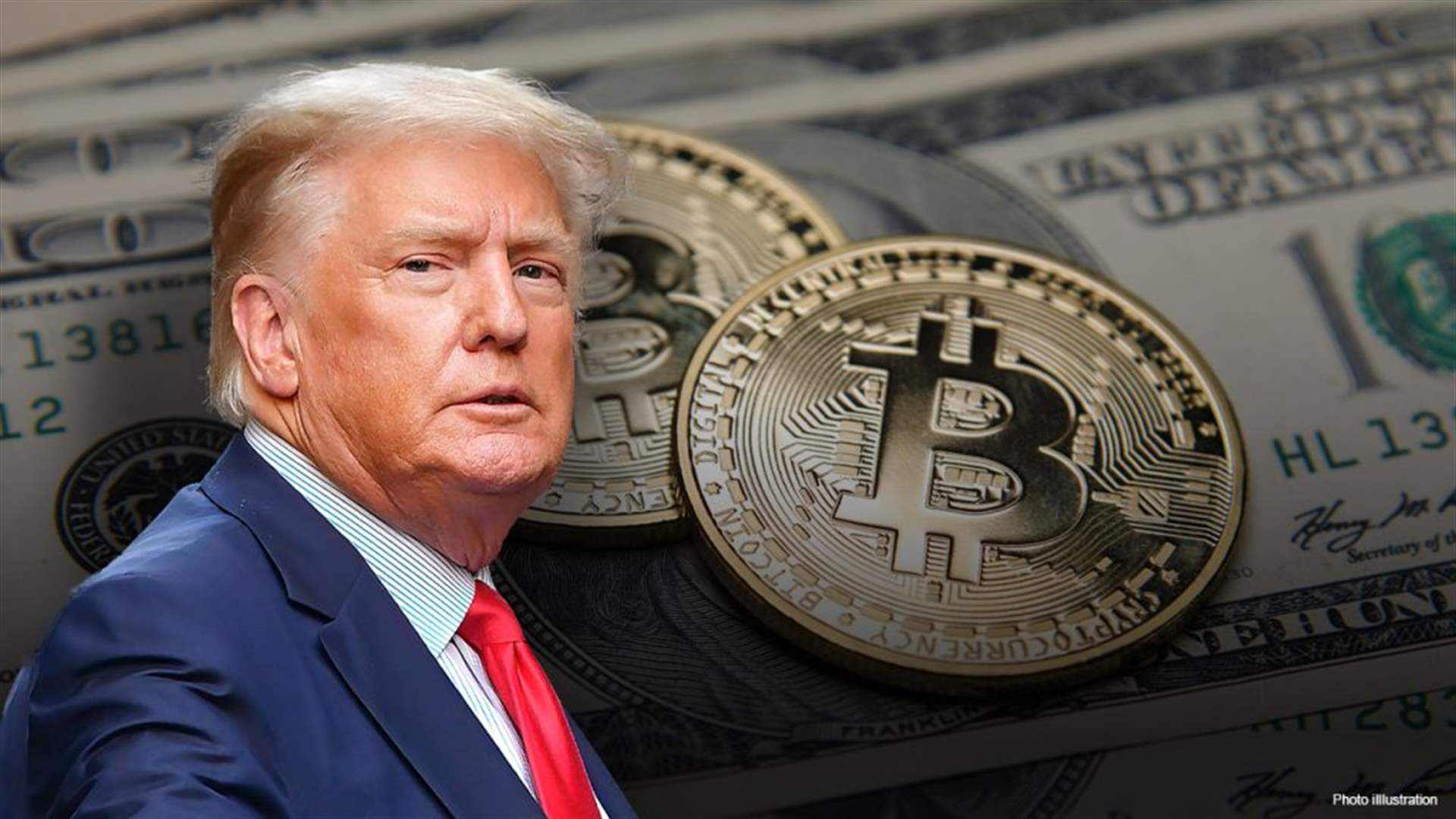
Trump-linked crypto ventures leave investors with $4.7 billion in losses
Investors in crypto projects tied to President Donald Trump’s family have seen their holdings plummet, resulting in at least $4.7 billion in combined losses. While retail buyers absorbed the brunt of the market decline, Trump himself generated approximately $1.4 billion in income from these ventures throughout 2025.

Polish Olympic Chief Arrested in Zondacrypto Fraud Probe
Radosław Piesiewicz, head of the Polish Olympic Committee, faces criminal charges linked to the collapse of the Zondacrypto exchange. Prosecutors allege the official leveraged insider information to secure his personal assets while thousands of platform users saw their funds frozen, leaving estimated total losses exceeding 350 million zlotys.

Stellar’s $3B Tokenized Asset Market Struggles to Ignite DeFi
While Stellar has successfully attracted over $3 billion in tokenized real-world assets, the network’s decentralized finance protocols have yet to mirror this growth. With only $2 million currently utilized in lending pools capable of accepting these assets, the gap underscores a persistent friction between traditional finance and onchain utility.

Bitcoin’s 22% Rally Faces Critical Test of Sustained Demand
Bitcoin’s recent 22% surge, sparked by a U.S. Treasury announcement regarding long-term bond buybacks, now faces a structural turning point. As the initial macro-driven momentum cools, market analysts are scrutinizing whether spot demand and ETF inflows can maintain the price floor before the program officially begins on September 9.

Ethena Proposes Aggressive Buyback Plan to Revive ENA Value
Ethena is pivoting its economic model, proposing that 95% of net revenue be funneled into ENA buybacks once the USDe stablecoin supply hits a $7.5 billion threshold. The protocol is also moving to eliminate monthly investor token unlocks, aiming to stabilize the asset as it seeks to decouple from Ethena Labs equity.

Mantle Network Accumulates $880 Million in Stablecoins and Tokenized Assets
Mantle has reached an $880 million milestone in total value, driven by a diversified expansion into tokenized equities, U.S. Treasuries, and yield-bearing assets. The network’s growth highlights a strategic pivot toward integrating real-world financial instruments directly onto its blockchain infrastructure, moving beyond simple transactional use cases.
Truflation Urges Fed Rate Cut After Accurate Inflation Forecast
Data provider Truflation is pushing the Federal Reserve to lower interest rates, citing a cooling economy after its latest inflation forecast accurately mirrored the U.S. Bureau of Economic Analysis report. The firm’s projection for July PCE figures landed within 0.01 percentage point of official government data released on August 26.

Stable Sea Expands Treasury Platform with WisdomTree Tokenized Funds
Corporate finance teams using the Stable Sea Terminal can now allocate idle cash across three SEC-registered WisdomTree digital funds. By lowering investment minimums to as little as $1, the platform aims to provide smaller businesses with the same treasury management tools previously reserved for institutional-grade balance sheets.

Hyperliquid Strategies Expands HYPE Treasury to $1.9 Billion
Hyperliquid Strategies has aggressively scaled its digital asset reserves, doubling its HYPE holdings to 29.3 million tokens. The Nasdaq-listed firm, which operates through the PURR ticker, reported a $305.5 million annual net income while maintaining a debt-free balance sheet as of the fiscal year ending June 30.

Charles Schwab Expands Crypto Offering With SOL, AVAX and LINK
Charles Schwab is broadening its digital asset reach by adding Solana, Avalanche and Chainlink to its crypto platform. This expansion marks a shift for the brokerage, which previously restricted direct trading to Bitcoin and Ethereum, as it aims to capture growing demand from its 39.8 million active accounts.

Moonwell Lending Protocol Loses $8.7 Million in MAMO Exploit
The decentralized lending protocol Moonwell has suspended borrowing across its Core Markets on Base following a price manipulation attack that drained approximately $8.7 million. Security researchers report that the perpetrator exploited the illiquid MAMO token to inflate its collateral value before siphoning off high-liquidity cbBTC assets.
Ripple Prime Enters U.S. Equity Derivatives Market with Delta One
Institutional investors can now trade total return swaps linked to U.S.-listed equities, indexes, and digital assets through Ripple Prime. The newly launched Delta One service allows hedge funds and asset managers to gain market exposure without direct ownership, leveraging a unified, multi-asset brokerage architecture.

Postquant Labs Unveils Bridgeless Swap Protocol QuipSwap
Postquant Labs is launching QuipSwap, a protocol designed to execute cross-chain asset swaps without traditional bridges, oracles, or wrapped assets. By utilizing a peer-to-peer mechanism, the platform aims to eliminate common security vulnerabilities while preparing blockchain infrastructure for the future threat of quantum computing.

Bitfinex Securities Secures Record $50M for Nickel-Backed Token
Bitfinex Securities has closed a record $50 million capital raise for Alkemya, leveraging a tokenized security backed by a $1.64 billion nickel asset base. The transaction marks the platform's largest issuance to date, surpassing previous efforts centered on U.S. Treasury products and corporate debt offerings.