Cryptocurrency

Bitcoin holds steady as market pivots around $76,350
Bitcoin has maintained a narrow trading range between $76,500 and $79,500 for five consecutive sessions, anchored by a $76,350 active-investor cost basis. Despite macroeconomic headwinds and cooling demand for spot ETFs, analysts at Bitfinex suggest that the asset’s current positioning significantly reduces the risk of a deep, sustained pullback.

Bitcoin Mining Apps: Navigating Passive Income Tools in 2026
As energy costs and hardware requirements shift the landscape of digital asset production, a new generation of mobile and cloud-based applications promises to lower the barrier to entry for individual miners. These platforms aim to replace heavy infrastructure with remote access, though participants face varying levels of technical complexity and risk.

Coinbase Expands Derivatives Access for Canadian Institutional Investors
Eligible Canadian institutional and sophisticated investors can now access 23 perpetual and dated crypto futures through Coinbase Financial Markets. The rollout includes leverage of up to 10 times on major assets like Bitcoin, Ethereum, and Solana, alongside commodity and index contracts, marking a significant expansion of the firm’s regulated derivatives footprint.

Ault Blockchain pivots to finance-first infrastructure
After his company faced sudden banking restrictions during the pandemic, Todd Ault decided the only way to ensure financial continuity was to bypass the gatekeepers entirely. His new Layer 1 network aims to provide the benefits of compliance without the systemic risk of arbitrary service termination by traditional banks.
Bitfinex Securities expands into tokenized Bitcoin treasury stocks
Bitfinex Securities has launched five tokenized products tracking companies that hold Bitcoin in their corporate treasuries, marking the first time such securities have reached a regulated exchange. The notes allow investors to gain fractional exposure to equity from firms including Strategy and Metaplanet via the Liquid Network.
OpenPayd Secures U.S. Foothold Through MSB USA Acquisition
London-based financial infrastructure provider OpenPayd has integrated MSB USA, securing 43 state money transmitter licenses to broaden its reach across the American payments market. The move arrives as the company prepares for a planned merger with Titan Acquisition Corp and a potential listing on the Nasdaq exchange.
UK Borrowing Costs Hit 18-Year High as Fiscal Pressure Mounts
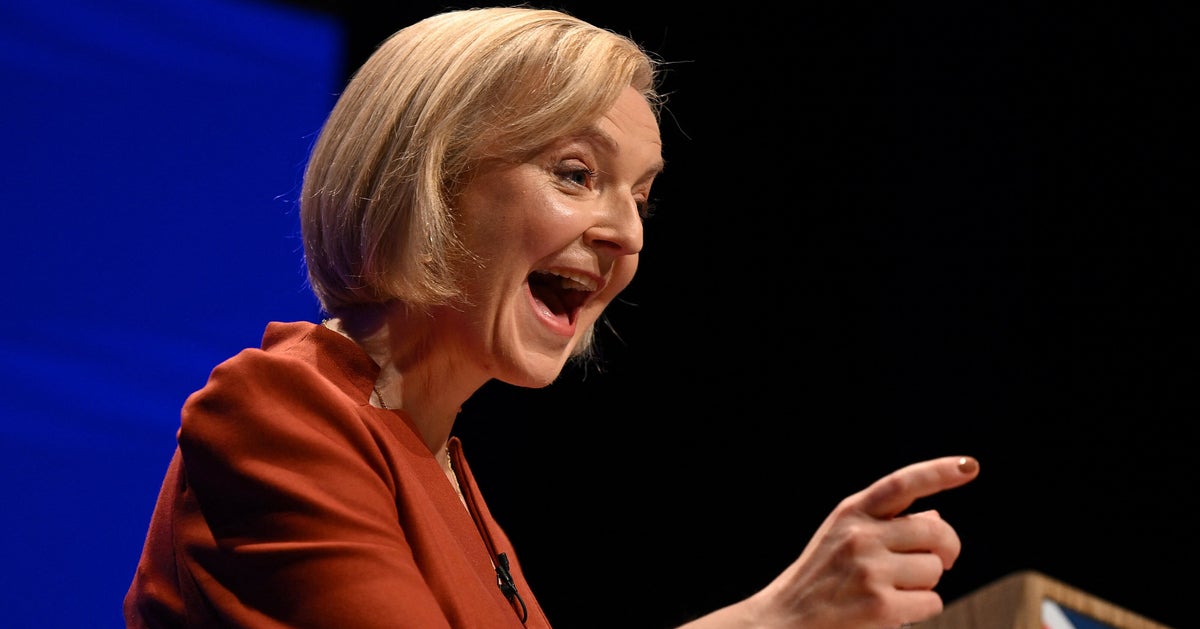
British government bond yields climbed to their highest levels since 2006 this week, fueling concerns that the Treasury may be forced into drastic fiscal adjustments. As 10-year gilt yields hit 5.268%, former Prime Minister Liz Truss warned that mounting debt levels could soon necessitate emergency spending cuts.

Crypto firms push back against blanket SEC rules for novel ETFs
Grayscale Investments, a16z, and the Crypto Council for Innovation have formally challenged the SEC’s inquiry into whether novel exchange-traded funds require uniform, restrictive oversight. The coalition argues that applying a one-size-fits-all regulatory framework to diverse assets like crypto and leveraged products stifles innovation and misrepresents their distinct risk profiles.

Base pivots to direct grants for creators after social strategy reset
Base has launched a new grant program offering independent content creators up to $4,000 to produce material focused on the Ethereum layer 2 network. The initiative marks a strategic shift for the platform, moving away from previous engagement-based token rewards toward direct funding for writers, streamers, and educators.

Robinhood Chain RWA volume hits $390 million as memecoin pairs surge
Trading volume linked to real-world assets on the Robinhood Chain has climbed to a record $390 million daily, fueled by an unexpected fusion of speculative memecoins and tokenized equities. This surge marks a significant shift in network activity as liquidity pools increasingly pair high-volatility tokens with traditional stock-linked assets.
HashKey Group Joins DTCC Digital Assets Working Group
HashKey Group has become the first Asian digital asset service provider to join the Depository Trust & Clearing Corporation’s advisory working group. The Hong Kong-based firm will share regional regulatory insights as the DTCC prepares for an October launch of its institutional tokenization services.

Prospect Markets partners with Crypto.com for U.S. prediction platform
Prospect Markets has finalized a definitive agreement with Crypto.com’s U.S. derivatives arm and OG Prediction Markets to launch a regulated sports-focused betting platform. The deal leverages existing federal clearing infrastructure, with the company aiming for a third-quarter rollout to capture traffic ahead of the upcoming NFL and NBA seasons.

Bitcoin Mining Faces Its First Hashrate Bear Market
Bitcoin is enduring a prolonged decline in network computing power, a phenomenon Twenty One Capital CEO Raphael Zagury describes as the industry’s first hashrate bear market. Unlike previous shocks, this downturn stems from miners systematically pivoting their infrastructure and capital toward the more lucrative artificial intelligence sector.

Adam Back boosts stake in Capital B via €7.6 million private placement
Strategic investor Adam Back has injected €7.6 million into Capital B through a private placement of 13.18 million shares. The deal, which includes attached warrants, provides fresh capital for the company to expand its Bitcoin treasury, potentially pushing its total holdings to 3,521 BTC.

Strategy CEO Defends Bitcoin Trading Strategy Amid Price Swings
Strategy CEO Phong Le is dismissing concerns over the company’s decision to sell Bitcoin near $60,000 only to buy back in at $80,000, asserting that the firm’s treasury transactions are driven by internal capital costs and balance sheet health rather than speculative market timing.

Circle and OKX deepen stablecoin integration for traders
Circle and OKX are expanding the reach of USDC across spot, margin, and futures markets, aiming to bolster liquidity for the dollar-pegged stablecoin. The collaboration includes a new incentive program designed to drive adoption among active traders while building on the exchange's existing infrastructure for digital asset conversion.
Governance Takeover Attempt Targets YAM Finance Treasury
An attacker has moved to seize control of YAM Finance, accumulating enough delegated voting power to push a proposal that would grant them administrative authority over the protocol’s Timelock. The move puts approximately $337,000 in DAO assets at risk, prompting an urgent call for holders to vote down the malicious measure.

Armed Home Invasion in Alès Highlights Surge in Crypto-Targeted Violence
Two masked intruders held a couple captive in their Alès home for over two hours early Saturday, brandishing a handgun and knife to coerce cryptocurrency transfers. The assailants fled when neighbors heard the victims’ screams and alerted police, leaving the family physically unharmed but marking another escalation in French crypto-related crime.

GTA VI Leaker Linked to $350,000 Crypto Windfall
Wallets tied to the controversial CYBERLEEK memecoin have withdrawn approximately $350,000 in liquidity fees, according to onchain analyst Conor Grogan. The funds were generated as unauthorized footage of Rockstar Games’ upcoming GTA VI title drove viral trading volume to the token, marking a departure from traditional pump-and-dump schemes.

Robinhood CEO Fuels Memecoin Speculation With Cryptic Social Media Post
A single ear emoji posted by Robinhood CEO Vlad Tenev on X has reignited market speculation regarding the brokerage's memecoin strategy. While the brief interaction served as a nod to community requests, the company has provided no formal confirmation of new asset listings or expanded product offerings for its retail platform.
Remixpoint Shifts Strategy, Liquidating Altcoins for Bitcoin Focus
Japanese listed firm Remixpoint has cleared its entire altcoin portfolio, selling off Ethereum, Solana, XRP, and Dogecoin for ¥878.8 million. The move leaves the company with 1,506 Bitcoin as its exclusive cryptocurrency holding, marking a decisive pivot toward a singular treasury strategy focused on the market leader.

Figure Technology Solutions Finalizes $717 Million Acquisition of Kiavi
Figure Technology Solutions has officially absorbed real estate lender Kiavi, integrating the firm’s residential transition and debt service coverage ratio lending technology into its blockchain-based marketplace. The $717 million deal, finalized after a June agreement, expands Figure’s footprint in the residential investor loan sector.

OKX Tightens Scrutiny on High-Risk Crypto Deposits
Deposits flagged as high-risk by OKX may trigger compliance reviews lasting 15 days or longer, potentially resulting in frozen funds and account restrictions. CEO Star Xu confirmed the exchange is intensifying its anti-money laundering protocols following reports that transfers from unregulated betting platforms triggered internal investigations.

Crypto-backed PAC spends $189K as Auchincloss secures primary win
Representative Jake Auchincloss fended off a primary challenge from Jason Poulos in Massachusetts’ Fourth Congressional District on Sept. 1, securing 72.3% of the vote. The victory followed a $189,527 expenditure by Protect Progress, a crypto-industry super PAC that backed the incumbent while drawing fire from his opponent.

TradeXYZ Dominates HIP-3 Markets as Quarterly Volume Hits $202 Billion
TradeXYZ recorded $202.36 billion in trading volume during the second quarter of 2026, marking a 79.2% increase over the previous period. This growth, detailed in a report by the Hyperliquid Research Collective, coincides with the sudden exit of three major competitors, solidifying the platform's grip on the HIP-3 ecosystem.

Core DAO triggers emergency hard fork after validator reward exploit
Core DAO is coordinating an emergency hard fork to resolve a vulnerability that allowed a select group of validators to claim excess CORE rewards. While the project maintains that user assets remain secure, the incident has forced major exchanges to suspend token transfers until the network upgrade is finalized.

Fogo Restarts Mainnet After Burning Recovered Stolen Tokens
Fogo has resumed normal operations following a security breach that saw 400 million FOGO tokens siphoned from the Foundation. The project confirmed the recovery and subsequent permanent removal of 237 million tokens from its total supply, though 163 million remain outstanding as the investigation into the compromise continues.

G20 Pushes for Unified Digital Asset Oversight
Finance ministers and central bank governors from G20 nations have pledged to develop clear, harmonized regulatory frameworks for digital assets. Meeting in Asheville, North Carolina, officials prioritized balancing the potential for financial innovation with the pressing need to mitigate cross-border risks and preserve global monetary stability.
Global Banking Consortium Targets 2027 Stablecoin Launch
Twenty-one major financial institutions, including Bank of America, Citi, and Goldman Sachs, have committed to forming a joint venture to issue a U.S. dollar-denominated stablecoin. The group, spanning four continents, aims to launch the digital asset in the first half of 2027 to facilitate wholesale, institutional, and retail payments.

Hyperliquid Strategies Expands Equity Facility to $2.5 Billion
Hyperliquid Strategies has increased its equity financing facility with Chardan Capital Markets to $2.5 billion, according to a September 1 SEC filing. The move follows the firm nearing its original $1 billion limit, providing the company with additional flexibility to fund corporate operations and potential token acquisitions.