Wealth

Abu Dhabi Global Market Posts 54 Percent Surge in Assets Under Management
A 54 percent year-on-year jump in assets under management has cemented Abu Dhabi Global Market’s status as a primary financial anchor in the Middle East. Despite regional geopolitical friction, the hub’s expansion underscores a broader shift as global firms accelerate their footprint within the United Arab Emirates’ financial ecosystem.

Justin Onuekwusi Appointed Permanent CEO of Investments at SJP
After serving in an interim capacity since January, Justin Onuekwusi has been named the permanent CEO of Investments at UK wealth manager St James’s Place. He succeeds Tom Beal, who departs the firm following a period of compassionate leave, and joins the Group Executive Committee effective immediately.

Mashreq Rebuilds Private Banking Through Client-Led Digital Design
Rather than relying on back-office technologists to dictate platform development, Mashreq has overhauled its private banking architecture by putting relationship managers and high-net-worth clients in the driver’s seat. The Dubai-based lender’s strategy prioritizes a front-to-back design approach, ensuring digital tools mirror real-world advisory workflows.

Executive Appointments at Apex, Charles Russell Speechlys and PIMFA
A flurry of high-level talent movement is reshaping the wealth management landscape, with major appointments spanning from London boardrooms to Dubai’s corporate legal sector. Apex Group, Charles Russell Speechlys, and the industry trade body PIMFA have all announced strategic shifts to bolster their leadership and regional expertise.
Mashreq Rebuilds Private Banking Through Client-Led Digital Architecture
Rather than relying on back-office technologists to dictate banking interfaces, Dubai-based Mashreq has shifted its digital strategy to a user-first model. Global head of private banking Vipul Kapur says the bank’s wealth management tools are built by business teams, prioritizing a seamless, front-to-back experience for high-net-worth clients.

Theta Capital Eyes Seventh Venture Fund to Scale Blockchain Infrastructure
Amsterdam-based Theta Capital Management is preparing to launch its seventh blockchain venture capital vintage, signaling a push to capture institutional demand for digital asset infrastructure. The firm, which manages roughly $1.4 billion, focuses on the foundational protocols currently replacing traditional financial intermediaries.

Lord Robertson and Louis Theroux to Headline Jersey Finance Conference
Former NATO Secretary General Lord George Robertson will headline Jersey Finance’s “Trusted Shores” conference in London on September 22. The event seeks to bridge the gap between traditional wealth management and a volatile geopolitical landscape, featuring insights from the former defence secretary alongside broadcaster Louis Theroux.

Aberdeen Taps Finloop to Tokenize Private Market Assets in Hong Kong
Aberdeen Investments has appointed Finloop Finance as a distributor for its Global Private Markets strategy, marking a shift toward digital delivery. By leveraging tokenized interests, the asset manager aims to provide professional investors in Hong Kong streamlined access to private equity, credit, infrastructure, real estate, and natural resources.

Schroders Enters Thai Wealth Market Through TMBThanachart Partnership
UK-based Schroders is expanding its footprint in Southeast Asia by forming a joint venture with ttb wealth securities, a subsidiary of TMBThanachart Bank. The collaboration aims to provide sophisticated investment strategies to high-net-worth and ultra-high-net-worth clients, marking a strategic shift toward localized partnerships to capture growing regional affluence.

Barclays Re-establishes Singapore Booking Hub to Capture Asian Wealth
Ten years after divesting its Asian private banking arm to OCBC, Barclays is returning to the Singapore market with a newly launched booking centre. The move signals a strategic pivot for the UK-headquartered group, aiming to capture the rising tide of cross-border wealth flowing through the city-state.

Lync Wealth Management Expands Northern Ireland Footprint
Belfast’s financial landscape is shifting as Lync Wealth Management acquires Carleton Financial Planning and RJ Savage Asset Management. These dual acquisitions inject approximately £300 million in assets under advice into the firm’s regional portfolio, signaling an aggressive push to establish a dominant wealth management hub across Northern Ireland.

Columbia Threadneedle Expands ETF Range as Aubrey Capital Relocates
Columbia Threadneedle Investments has launched its fourth QR Series active ETF, targeting emerging market equities across major European exchanges, while Edinburgh-based Aubrey Capital Management moves its headquarters to a new facility in the city’s West End to support its evolving operational needs.
Edmond de Rothschild Unveils Flagship Monaco Office
Overlooking the bustling Place d’Armes in La Condamine, Edmond de Rothschild has consolidated its Monegasque operations into a new 5,300-square-metre headquarters. The move marks four decades of the private bank’s presence in the principality, housing 270 employees within a purpose-built structure designed to mimic the intimacy of a luxury townhouse.
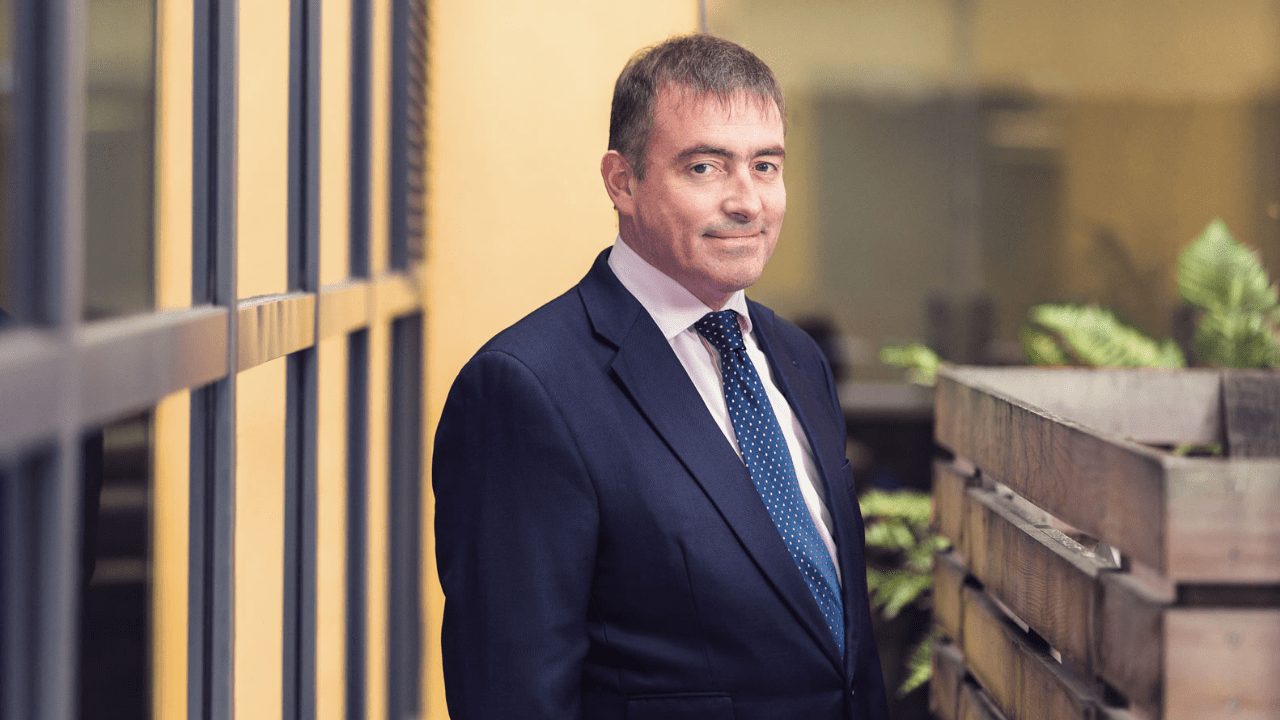
Brooks Macdonald Hits Record £21.7 Billion FUMA
After a two-year transformation cycle, UK wealth manager Brooks Macdonald reached record funds under management and advice of £21.7 billion for the 2026 fiscal year. The firm reported a 14 percent increase in assets and a return to positive annual net inflows, signaling a recovery in operational momentum.
Bank of Singapore Expands Dubai Private Banking Team
Bank of Singapore is bolstering its Dubai operations with the appointment of two experienced relationship managers, Mahesh Ramakrishnan and Shikhy Chandhok. These strategic hires signal a continued push to deepen the firm’s presence in the Middle East, a region now ranked among its three primary global financial hubs.

Penningtons Manches Cooper Expands Private Wealth into Singapore
UK law firm Penningtons Manches Cooper is planting its first flag outside domestic borders with a new private wealth practice in Singapore. The firm tapped Rachel Yao to spearhead the regional expansion, tasking her with navigating cross-border succession planning and governance for ultra-high-net-worth clients across the Asia-Pacific market.

GRT Capital Management Opens Dubai Hub
Hong Kong-based asset manager GRT Capital Management has officially entered the Middle East, establishing a new regional hub within the Dubai International Financial Centre. The firm, now regulated by the Dubai Financial Services Authority, aims to capture growing demand for alternative and Shariah-compliant investment strategies across the MEASA region.

Barclays Opens Singapore Booking Centre for Global Wealth Clients
Barclays has expanded its footprint in Singapore, launching a private bank booking centre designed to cater to ultra-high net worth individuals and family offices. This move positions the firm to capture a growing share of the Asia-Pacific market, which is projected to become the world's largest wealth hub by 2030.

Pacific Asset Management and Citi Wealth Announce Leadership Changes
London-based Pacific Asset Management and global giant Citi Wealth are reshuffling their senior ranks to bolster investment and platform capabilities. Scott Spencer joins the former to drive multi-asset strategy, while Elizabeth McElherne steps into a pivotal leadership role at Citi to manage complex global investment vehicles.

Swiss Lawmakers Propose Capital Compromise for UBS
Swiss legislators have signaled a shift in banking oversight, backing a plan that requires UBS to hold 50 percent of its foreign subsidiary capital in Common Equity Tier 1. The proposal offers a middle ground for the banking giant, which has resisted government demands for full, rigid capital backing.

Schroders, Utmost, and Seraphim Space Expand Investment Portfolios
Investment firms are aggressively diversifying their product suites to capture shifting demand, with Schroders launching regional active ETFs, Utmost establishing a dedicated distribution arm in Portugal, and Seraphim Space debuting a specialized fund focused on the burgeoning space economy.

Investors Bet on AI-Driven Global Growth Surge
Nearly every professional investor surveyed by London-based fund manager Robocap anticipates a major AI breakthrough this year, fueled by a massive expansion in computational power. With $513 billion in assets under management represented, the findings suggest that artificial intelligence will account for 22 percent of global economic growth.

AI Boom Masks Structural Export Weakness Across East Asia
The global surge in artificial intelligence investment is fueling trade surpluses and GDP growth in Korea, Singapore, Taiwan, and Malaysia. However, this semiconductor-driven momentum obscures a troubling stagnation in non-AI export sectors, as rising competition from China challenges the region’s traditional manufacturing dominance.
Saxo Bank Hits Record Profit Amid Market Volatility
With €87 million in net profit for the first half of 2026, Copenhagen-based Saxo Bank has eclipsed its previous financial benchmarks. Despite a global landscape defined by geopolitical tension and persistent macroeconomic uncertainty, the firm secured an 18 percent year-on-year increase, signaling robust expansion in its core commercial metrics.

Permira Completes £2.7 Billion Take-Private Acquisition of JTC
A £2.7 billion deal has officially transitioned JTC from a publicly traded firm on the London Stock Exchange to a private entity. The acquisition, led by private equity firm Permira alongside the Canada Pension Plan Investment Board, marks a new chapter for the Jersey-based global professional services provider.

UK Charities Pivot Toward Private Markets and Active Management
Nearly nine out of ten UK charities have ramped up their private equity holdings over the past two years, signaling a broader departure from traditional investment models. A new study from wealth manager Rathbones reveals that these organizations are prioritizing capital growth and diversification through complex, active strategies.

Pictet Asset Management Targets European ETF Growth
Geneva-based Pictet Asset Management has appointed Alfred Le Léon as head of ETF distribution for the EMEA region. The creation of this new role follows the firm’s recent entry into the European ETF market, signaling a strategic effort to capture rising demand for passive and active index-based investment vehicles.
Paris Asset Manager Carmignac Opens Dubai Hub
Paris-based asset manager Carmignac has officially expanded into the Middle East, launching a new regional office within the Dubai International Financial Centre. The firm secured authorization from the Dubai Financial Services Authority, marking a calculated push to capture growing demand from institutional and private wealth investors across the region.
Global AI Infrastructure Investment Projected to Hit $31.6 Trillion
The global surge in artificial intelligence will demand a staggering $31.6 trillion in infrastructure investment through 2050, according to a new report from PwC. Unlike traditional construction cycles, this capital expenditure will be driven primarily by rapid, recurring hardware upgrades rather than mere physical building footprints.
CFA Institute Warns of Risks in Retail Private Credit Expansion
As regulators in the U.S. and Europe open private credit markets to retail investors, the CFA Institute warns that current oversight is failing to keep pace. The expansion of these illiquid, complex assets into wealth platforms creates structural vulnerabilities that demand more rigorous fund governance and transparency standards.