Cryptocurrency

Prediction Market Kalshi Secures $1.12 Billion in Equity Funding
A recent Securities and Exchange Commission filing reveals that Kalshi has raised $1.12 billion in equity since April, leaving roughly $380 million of a planned $1.5 billion offering available. The update underscores the rapid capital influx fueling the prediction market operator as it eyes a potential $40 billion valuation.
BlackRock Cuts IBIT Bitcoin Swap Minimum to $1 Million
BlackRock has slashed the minimum threshold for in-kind Bitcoin-to-IBIT conversions by 96%, dropping the requirement from $25 million to $1 million. This strategic adjustment aims to broaden access to the asset manager’s spot Bitcoin ETF for wealthy individuals and institutional investors looking to exchange existing holdings for shares.

Kraken locks accounts following 12,000 unsolicited HTX-linked transfers
Between August 17 and 24, Kraken restricted customer accounts after receiving nearly 12,000 tiny cryptocurrency transfers tied to the sanctioned exchange HTX. The exchange characterized the incident as a compliance-poisoning attack, designed to force regulatory scrutiny onto unsuspecting users by flooding their digital wallets with restricted assets.

Thirty-nine state banking associations form BankChain Alliance
Thirty-nine state banking associations have formed the BankChain Alliance, an industry-led initiative aiming to launch a nationwide blockchain network by 2027. The project seeks to provide smaller and regional financial institutions with a unified infrastructure for tokenized deposits, stablecoins, and automated financial settlement services.
Bitcoin payments dwindle at El Salvador’s original crypto hub
A single restaurant in El Zonte, the coastal community famously dubbed Bitcoin Beach, recorded only one cryptocurrency transaction throughout August. While the incident remains anecdotal, it highlights a broader, multi-year decline in the use of Bitcoin for everyday commerce across El Salvador since the country adopted the asset as legal tender.

Japan explores 24/7 blockchain settlement for national markets
Japan’s financial regulators are moving to overhaul the country's securities infrastructure, initiating plans for a blockchain-based system capable of processing stock and government bond trades around the clock. The initiative aims to modernize settlement cycles that currently lag behind the efficiency of modern digital ledger technology.

SQD Integrates Validated Blockchain Data into Google Cloud BigQuery
Developers can now access verified historical data from 10 blockchain networks directly within Google Cloud’s BigQuery platform. Through a partnership with SQD, this integration provides indexed chain records that undergo six cryptographic verification tests before entering the cloud environment to ensure data integrity for enterprise-scale analysis.

World Liberty Deploys USD1 Stablecoin on Canton Network
World Liberty Financial has launched its $4.05 billion USD1 stablecoin directly on the Canton Network, marking a shift toward native institutional settlement. By eliminating the need for blockchain bridges, the integration allows financial firms to synchronize cash payments with tokenized asset transfers in a single, atomic transaction.

JPMorgan Sets $240 Target for SpaceX, Citing AI Growth
JPMorgan has maintained an Overweight rating on SpaceX, setting a $240 price target that implies a 75% upside from current levels. Analyst Doug Anmuth pointed to the recent acquisition of Cursor and the subsequent integration of its data into the Grok AI model as a major driver for enterprise adoption.

Bitcoin Bull Score Hits 80, But $83K Weekly Close Remains the Hurdle
Bitcoin has surged into the early stages of a potential bull market, with CryptoQuant’s Bull Score climbing from 30 to 80 in a single week. While eight of the index’s ten indicators now flash bullish, analysts warn that the current rally requires a weekly close above $83,000 to confirm a cycle shift.

Term Finance Shuts Down Meta Vaults After $8.5 Million Governance Hack
Term Finance has permanently shuttered its Meta Vaults and stripped the DAO of its governance powers following a sophisticated exploit that drained approximately $8.5 million in user assets. The protocol confirmed the move on August 23, leaving depositors in a state of uncertainty regarding potential reimbursements or recovery timelines.
Crypto sentiment hits extreme greed as Bitcoin rallies toward $80,000
The cryptocurrency market has shifted into a state of extreme greed for the first time since late 2024, with CoinMarketCap’s sentiment index surging to 81. This 40-point jump in just one week follows a 24% rally in Bitcoin, which briefly pushed the asset above the $80,000 threshold.

RockawayX Targets $150M for New Liquid Crypto Fund
Following the acquisition of hedge fund Relayer Capital, Prague-based investment firm RockawayX is seeking $150 million for a new liquid opportunities vehicle. The fund aims to capitalize on undervalued tokens and crypto-related equities, marking a strategic pivot toward assets with higher market accessibility than the firm's traditional venture holdings.
Solana Transactions Hit Record High as SOL Price Reclaims $100
Solana processed a record 4.2 billion transactions in July, a 13.5% jump from June that mirrors the network's surging market utility. This milestone arrives as the SOL token rallied 40% over eight days, crossing the $100 threshold for the first time since February amid broader shifts in global liquidity.
Goldman Sachs Backs Coinbase and Robinhood Amid Bitcoin Rally
Bitcoin’s 26% weekly surge to $81,000 has revived institutional optimism, prompting Goldman Sachs to maintain bullish buy ratings on Coinbase and Robinhood. While trading volumes across the sector saw a sharp decline throughout the summer, the bank is betting that market recovery and new financial products will drive revenue.

Bitwise Debuts Automated Token Portfolios Using Coinbase Stock Tokens
Bitwise has introduced three automated token portfolios, or ATPs, allowing non-U.S. investors to mirror professional investment models directly within their own non-custodial wallets. By leveraging Coinbase’s recently launched tokenized U.S. stocks, the firm aims to combine institutional-grade asset allocation with the autonomy of onchain self-custody.

World Liberty Defends USD1 Stablecoin Growth Amid Scrutiny
World Liberty Financial is pushing back against claims that its $4 billion USD1 stablecoin owes its rapid expansion to political connections. CEO Zach Witkoff asserts that the asset’s growth is driven by institutional demand rather than the company’s ties to President Donald Trump’s administration.
Mantle Bridges Real-World Asset Yields to DeFi via Non-Custodial Vault
Mantle has transitioned its real-world asset yield product from centralized exchange Bybit to a non-custodial DeFi environment. The new vault, now live on the Fluxion network, allows users to deposit USDC or USDT0 to access sUSDS-based yields without relinquishing control of their private keys to a third-party custodian.

Bitcoin Climbs to $81,000 as Jackson Hole Approaches
As Bitcoin tests the $81,000 threshold, market participants are bracing for Federal Reserve Chair Kevin Warsh’s inaugural address at the 2026 Jackson Hole Economic Policy Symposium. With the agenda shifting toward digital finance and regulatory frameworks, investors are weighing the risks of policy-driven volatility against ongoing accumulation strategies.
Crypto funds urged to drop Fed forecasting for systematic strategies
As Bitcoin surges toward $80,000, institutional managers are being advised to abandon the high-stakes game of predicting Federal Reserve policy. Moon Pursuit Capital argues that in a market defined by thin liquidity, building portfolios resilient to shifting macro conditions is a more reliable path than betting on central bank rhetoric.

Asian crypto traders pivot to traditional stock futures
Asian investors are increasingly abandoning traditional brokerage houses for 24/7 crypto platforms, driving a 3,308% surge in MEXC’s daily stock futures volume during the second quarter of 2026. This shift underscores a broader migration of capital from digital assets toward tokenized equities and precious metals.

Inside Binance: How CZ and Yi He adopted Simpsons-themed aliases
Within the high-stakes environment of the world’s largest cryptocurrency exchange, Binance co-founders Changpeng “CZ” Zhao and Yi He maintained a peculiar internal ritual. According to former employees, the pair routinely utilized codenames inspired by pop culture’s most famous yellow family, appearing in internal communications as Homer and Marge Simpson.
Grayscale Launches Zcash ETF, Pledging Fee Revenue to Network Growth
Investors now have direct exposure to Zcash through the newly launched ZCSH exchange-traded fund on NYSE Arca. The product, a conversion of Grayscale’s existing Zcash Trust, arrived Tuesday with a 2.5% annual sponsor fee, a portion of which the firm intends to reinvest into the privacy-focused ecosystem.

Operation Lighthouse tracks 7,700 suspect accounts in CSAM crackdown
Operation Lighthouse, a multi-day investigative sprint hosted at the National Cyber-Forensics and Training Alliance in New York, has generated 14,300 leads after tracing 29,120 cryptocurrency addresses linked to over 100 platforms distributing child sexual abuse material, resulting in the identification of 7,700 suspect accounts across 125 countries.
Kinetiq Unveils Elysium L2 Network to Expand Hyperliquid Ecosystem
Kinetiq introduced Elysium on Aug. 24, a new layer-2 network designed to bolster transaction capacity within the Hyperliquid ecosystem. By utilizing HYPE as its native gas token, the project aims to streamline cross-network movement while addressing the scalability constraints currently faced by HyperEVM users during periods of high market activity.
Thailand Drafts Rules for Bitcoin and Ether ETFs
Thailand’s Securities and Exchange Commission has moved to formalize its crypto investment landscape, unveiling draft regulations for locally listed spot Bitcoin and Ether exchange-traded funds. The proposal mandates that these funds maintain an 80% minimum exposure to their underlying digital assets while prioritizing domestic custody solutions for investor protection.

USDC Dominates Autonomous AI Payments via x402 Protocol
Nearly every payment processed through the x402 agent-payment protocol now moves through USDC, according to Circle’s latest quarterly data. As autonomous AI agents proliferate, the stablecoin has emerged as the preferred unit of account for machine-to-machine transactions, accounting for 99.3% of volume within the specific x402 ecosystem.

Visa and Nium Launch Stablecoin Settlement Pilot in Singapore
Visa has joined the Monetary Authority of Singapore’s BLOOM initiative, tapping cross-border payments provider Nium to test stablecoin settlement. The project aims to bridge the gap between traditional finance and blockchain by enabling seven-day settlement cycles for U.S. dollar and euro-backed stablecoins, bypassing the limitations of standard banking hours.
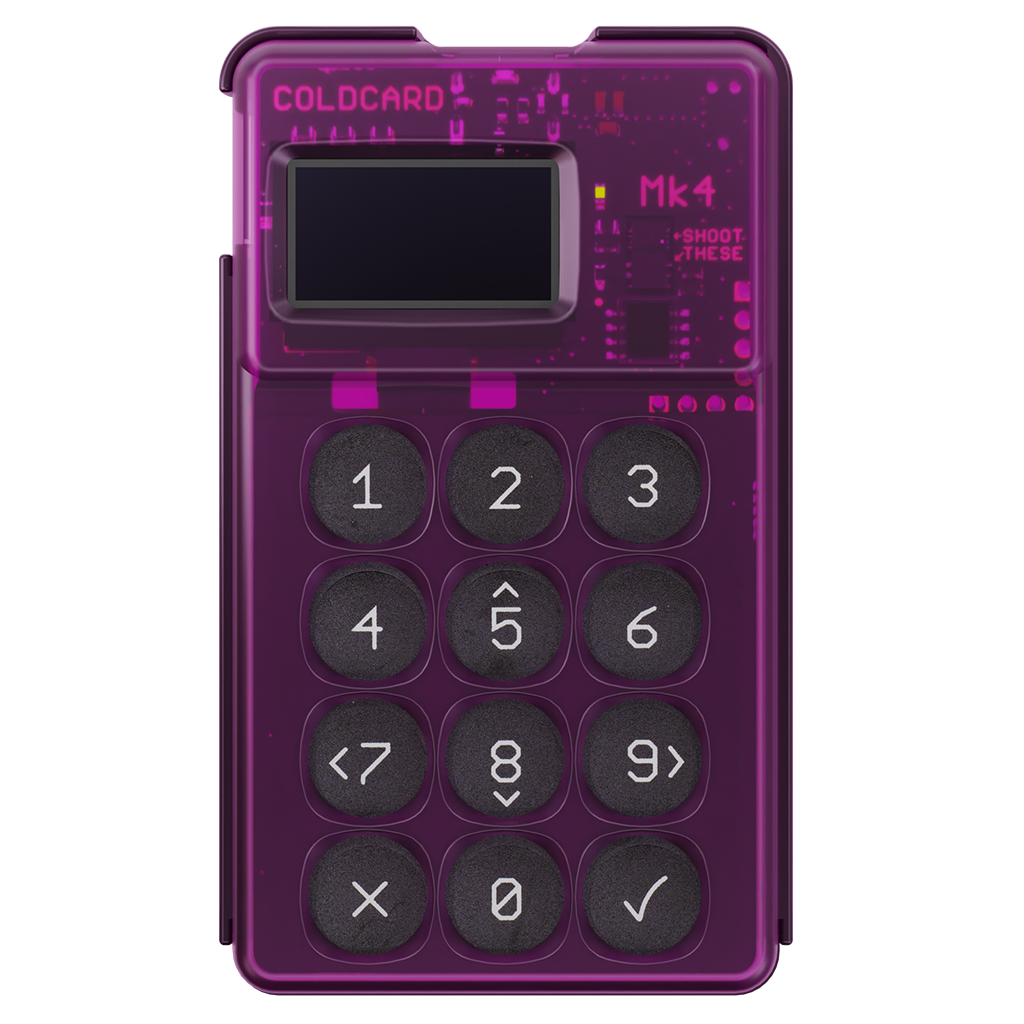
Most Stolen Coldcard Bitcoin Remains Untouched After $114M Exploit
More than 87% of the Bitcoin drained in the Coldcard wallet exploit remains stagnant, with 1,561 BTC sitting in attacker-controlled wallets. While researchers have traced 1,789 BTC to the breach, the lack of movement on the majority of funds provides an ongoing trail for law enforcement and compliance monitoring.

Monad Proposes Decoupling Wallet Addresses from Authentication Keys
Monad researchers have introduced a protocol upgrade designed to separate a blockchain address from the cryptographic keys that control it, enabling users to rotate credentials, implement social recovery, and adopt quantum-resistant security without the need to migrate assets to a new wallet.