Cryptocurrency
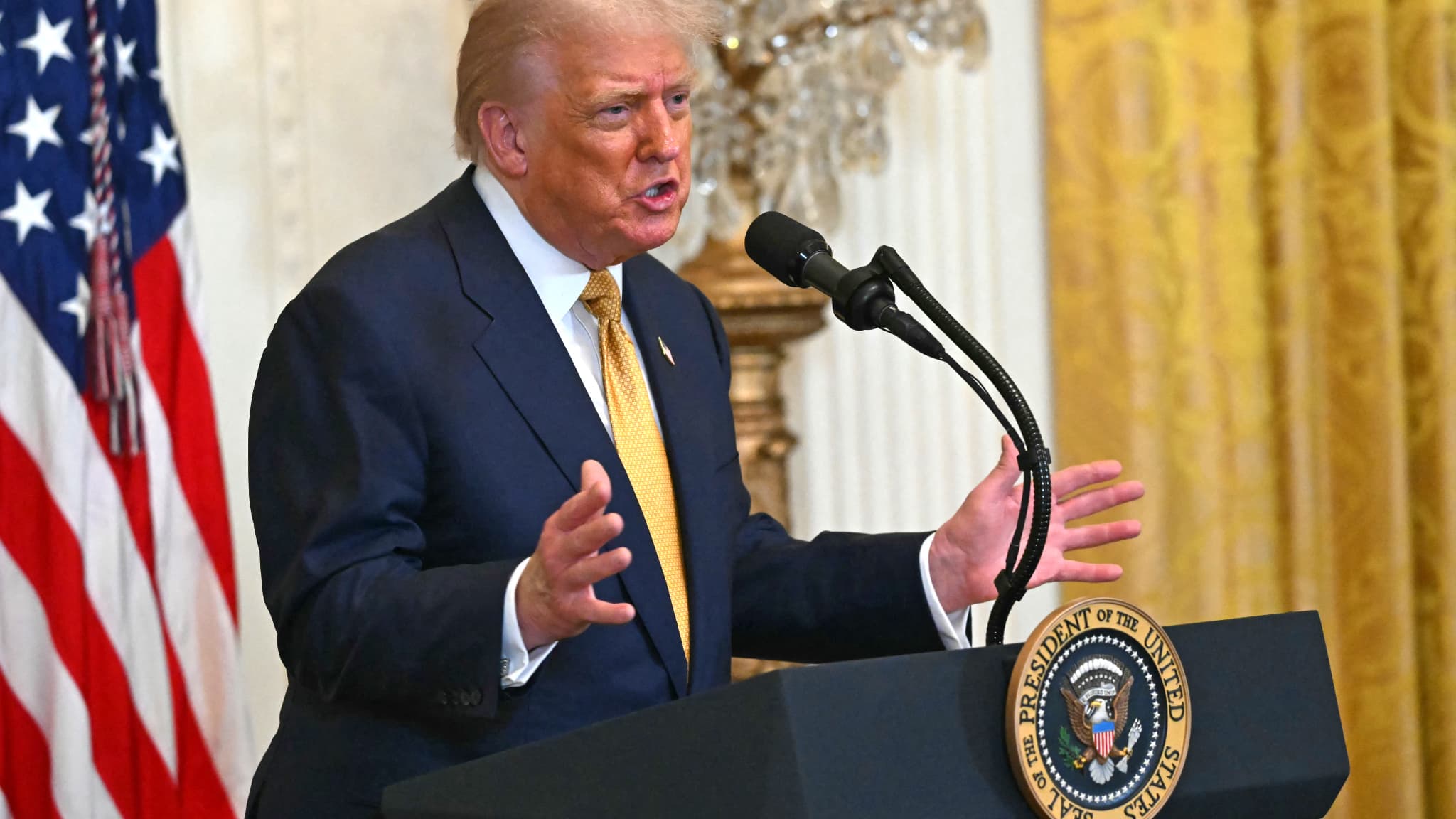
Trump Demands Rate Cuts as August Jobs Surge Spooks Markets
With U.S. employers adding 162,000 jobs in August—far outpacing the 56,000-job forecast—Donald Trump has intensified his pressure on the Federal Reserve to lower borrowing costs. The president’s demand, coupled with threats to restrict trade with deficit-running nations, arrived as markets braced for a potential September rate hike.

Michael Saylor asserts right to promote Bitcoin as commodity
MicroStrategy Executive Chairman Michael Saylor has declared that Americans do not require a license to publicly advocate for Bitcoin, drawing a sharp distinction between open discussion of the asset and illegal financial practices such as fraud or market manipulation.

The $30 Billion Gap: Why Most Tokenized Real-World Assets Sit Idle
While the market for tokenized real-world assets has ballooned to $34.6 billion, nearly 90% of that value remains dormant outside of decentralized finance protocols. This disconnect between issuance and active utility highlights a fundamental misunderstanding of what these assets are designed to achieve in an on-chain environment.

Robinhood and AMC Clash Over Unsanctioned Tokenized Shares
Robinhood’s legal chief has defied a demand from AMC Entertainment to halt trading of a tokenized version of its stock, transforming a corporate spat into a high-stakes stress test for how US regulators will eventually handle third-party synthetic equities that lack official issuer authorization.

DefiLlama and Forgd Launch Institutional-Grade Token Ratings
DefiLlama and token advisory platform Forgd have debuted a new rating system ranging from AAA to CCC, designed to bring institutional rigor to crypto-asset evaluation. While the system currently ranks 128 tokens based on disclosure and performance, architects warn that top-tier grades function as transparency benchmarks rather than investment guarantees.
Bank-backed stablecoin faces liquidity hurdle to challenge USDT
A consortium of 21 global financial institutions, including Bank of America and Goldman Sachs, plans to launch a dollar-pegged stablecoin by mid-2027. While the group brings unprecedented distribution power, industry experts warn that institutional backing alone cannot displace the market dominance of USDT and USDC without superior utility.

Robinhood Chain Stalls as Network Outage Halts Transactions
Robinhood Chain, the Ethereum layer-2 network, ground to a halt on September 4, failing to produce blocks for over 14 minutes. The disruption left token transfers and smart contract interactions in limbo, as the sequencer responsible for ordering transactions stopped functioning, forcing a temporary freeze in on-chain activity.

Sheriffs’ Association shifts to neutral on CLARITY Act ahead of Senate vote
The National Sheriffs’ Association has dropped its vocal opposition to the CLARITY Act just 12 days before a critical Senate procedural vote. By shifting to a neutral stance, the group removes a major hurdle for the legislation, which requires 60 votes to advance past a cloture motion on September 15.
Pendle Launches Yield-Trading Market on Robinhood Chain
Yield-trading protocol Pendle has officially entered the Robinhood Chain ecosystem, marking its expansion with the launch of an sNET market. This integration allows users to split their holdings into principal and yield components, providing a new layer of decentralized finance functionality on the recently launched Ethereum Layer 2 network.

Polygon co-founder Sandeep Nailwal initiates crypto-to-fiat Nepal relief
Sandeep Nailwal has launched a stablecoin donation channel to support Nepal’s official Prime Minister’s Disaster Relief Fund, following a catastrophic glacier collapse in the Himalayas. The initiative, bolstered by a $100,000 pledge from Blockchain for Impact, bridges the gap between digital assets and traditional government-sanctioned financial aid.

FinCEN links $12.7 billion to Southeast Asian crypto scam hubs
The U.S. Treasury’s Financial Crimes Enforcement Network has traced $12.7 billion in suspicious transactions to sophisticated digital asset investment scams. Based on nearly 34,000 reports filed over two years, the data reveals a sprawling criminal infrastructure operating primarily from industrial-scale compounds in Cambodia, Laos, and Burma.

South Korea Sets 2027 Deadline for Tokenized Securities Market
South Korea will launch a three-stage roadmap to integrate stocks, bonds, and funds onto blockchain infrastructure starting February 2027. The Financial Services Commission plans to transition capital markets to distributed ledgers, eventually incorporating stablecoin-based settlement to modernize how traditional financial assets are issued and traded.
Binance Updates Monitoring List and Alpha Recommendations
Four digital assets—AVA, GNS, SCR, and TOWNS—now carry Binance’s Monitoring Tag, signaling increased oversight for projects facing volatility or liquidity concerns. Simultaneously, the exchange trimmed its Alpha discovery list, removing 14 early-stage tokens from the platform's curated recommendations for users of the Binance Wallet.

Bitcoin ETFs surge with $731 million inflow
U.S. spot Bitcoin ETFs recorded $730.9 million in net inflows on September 3, marking their most aggressive trading session since mid-January. The surge, dominated by BlackRock’s iShares Bitcoin Trust, signals a sharp reversal after investors pulled $236 million from the funds just two days prior.
Dormant Bitcoin Wallet Linked to $293B Lawsuit Moves $3.1M
A Bitcoin address dormant since 2011 transferred 40 BTC on September 3, surfacing in a high-stakes New York legal battle. The wallet, identified as Noah Doe #38097, is one of 39,069 addresses currently subject to a $293 billion ownership claim that hinges on the classification of abandoned digital assets.
Binance Maintains EU Presence via Regulatory Loopholes
More than two months after the July 1 deadline for the European Union’s Markets in Crypto-Assets (MiCA) regulation, Binance continues to onboard and serve European customers. The exchange is leveraging reverse solicitation provisions and routing trades through offshore entities while it navigates a stalled path toward formal authorization.
Canary Capital Prepares Staked TRX ETF Launch
Canary Capital has signaled the imminent arrival of its proposed Canary Staked TRX ETF, marking a push to bring yield-generating digital assets to American brokerage accounts. The firm is currently directing potential investors to an amended registration statement filed with the U.S. Securities and Exchange Commission.

Banco do Brasil Joins Blockchain Finance With $5M Citi Note Deal
Banco do Brasil has executed a $5 million investment in a digitally native structured note issued by Citi, marking the first transaction of its kind involving a Latin American financial institution. The deal utilized Euroclear’s blockchain-based Digital Financial Market Infrastructure to automate issuance and lifecycle management.
Kalshi Expands Crypto Derivatives Lineup for U.S. Traders
Kalshi launched perpetual contracts for BNB, Cardano, Worldcoin, Aave, and Venice Token on September 4, granting U.S. traders expanded access to leveraged positions. These additions bring the platform’s total offering to 18 perpetual products, all margined and settled in U.S. dollars without fixed expiration dates.

Bottomline Taps Chainlink to Link $16 Trillion Network to Blockchains
Bottomline has entered a strategic partnership with Chainlink to bridge its $16 trillion annual payments network with public and private blockchains. The integration allows more than 600 bank customers to access onchain settlement rails while retaining the familiar ISO 20022 messaging standards they currently use for daily operations.

OpenReserve Secures Conditional OCC Approval for Salt Lake City Bank
The Office of the Comptroller of the Currency has granted OpenReserve preliminary conditional approval to organize a full-service national bank in Salt Lake City. The move marks a shift for the firm, which now faces the stringent regulatory hurdles required to integrate traditional insured deposits with digital asset services.

SoFi and Kraken Forge Institutional Banking and Trading Alliance
SoFi Technologies and Kraken parent Payward announced a strategic partnership on September 3, bridging traditional banking settlement rails with digital asset liquidity. The deal integrates Kraken’s trading infrastructure into SoFi’s platform while expanding the reach of SoFi’s bank-issued stablecoin, SoFiUSD, to Kraken’s global exchange.
Chainlink Brings Oracle Infrastructure to Tempo Blockchain
Tempo, the payments-focused layer-1 blockchain incubated by Stripe and Paradigm, integrated Chainlink Data Feeds on Sept. 3. This deployment provides developers with a standardized oracle network to import real-time market prices, enabling stablecoin applications to automate collateral valuation, treasury management, and cross-currency risk controls.

Uniswap Labs Takes Stake in High-Earning Launchpad PONS
Uniswap Labs has acquired a position in PONS, the native token of a prolific Robinhood Chain launchpad, to secure long-term alignment between the two projects. The move follows a period of massive fee generation for the platform, which has consistently outperformed competitors like Solana’s pump.fun in daily revenue.

Ripple CEO Pushes for CLARITY Act as Legislative Window Narrows
“Making America the crypto capital of the world is within reach — let’s finish the job,” Ripple CEO Brad Garlinghouse declared on September 3. His call to action follows a high-level White House gathering, placing the burden of proof on a looming Senate vote that could define the industry's future in the United States.

AMC CEO Adam Aron Pushes Back Against Robinhood’s Tokenized Shares
AMC Entertainment CEO Adam Aron has publicly disavowed a suite of tokenized products offered by Robinhood that track the theater chain’s stock price. Labeling the brokerage's unauthorized use of the AMC brand as "contemptible" and "outrageous," the executive announced plans to seek formal legal counsel to address the matter.

Saint Seiya creator sues former manager over $19.6 million diversion
Masami Kurumada, the legendary manga artist behind Saint Seiya, has filed a lawsuit at the Tokyo District Court seeking 2.89 billion yen in damages. The action follows the discovery that his former manager allegedly siphoned 4.68 billion yen from his companies over six years, reportedly sinking some of the capital into cryptocurrency.
Pocket Bitcoin breach expands to 5,411 customer records
A forensic investigation into an August security incident at Swiss service provider Pocket Bitcoin has revealed a wider reach than initially reported, with 5,411 customer records now confirmed as exposed. The breach primarily involves sensitive banking and identity documents stored in secondary support system backups rather than core infrastructure.
US and UK Launch Joint Task Force to Dismantle Global Crypto Scam Hubs
The United States and the United Kingdom have formalized a cross-border alliance to dismantle sprawling cryptocurrency scam networks that have cost victims billions of dollars. By integrating intelligence-sharing and prosecution strategies, the two nations aim to dismantle the organized crime syndicates operating out of illicit compounds.
Binance Issues Alert Over Surge in Sophisticated Phishing SMS
Cryptocurrency exchange Binance warned users on Sept. 3 of a sharp rise in phishing attacks, where scammers send text messages disguised as urgent account security alerts. These messages, which falsely claim that login activity or account settings have changed, aim to trick recipients into clicking malicious links.